
👉 Let’s stay connected on social media!
Korean Style Pot Roast
QUICK REMINDER:
There’s a “jump to recipe” button for convenience, but if you head straight to the recipe card, you might miss useful ingredient notes, step-by-step tips, FAQs, and other helpful details that can make your dish turn out even better.
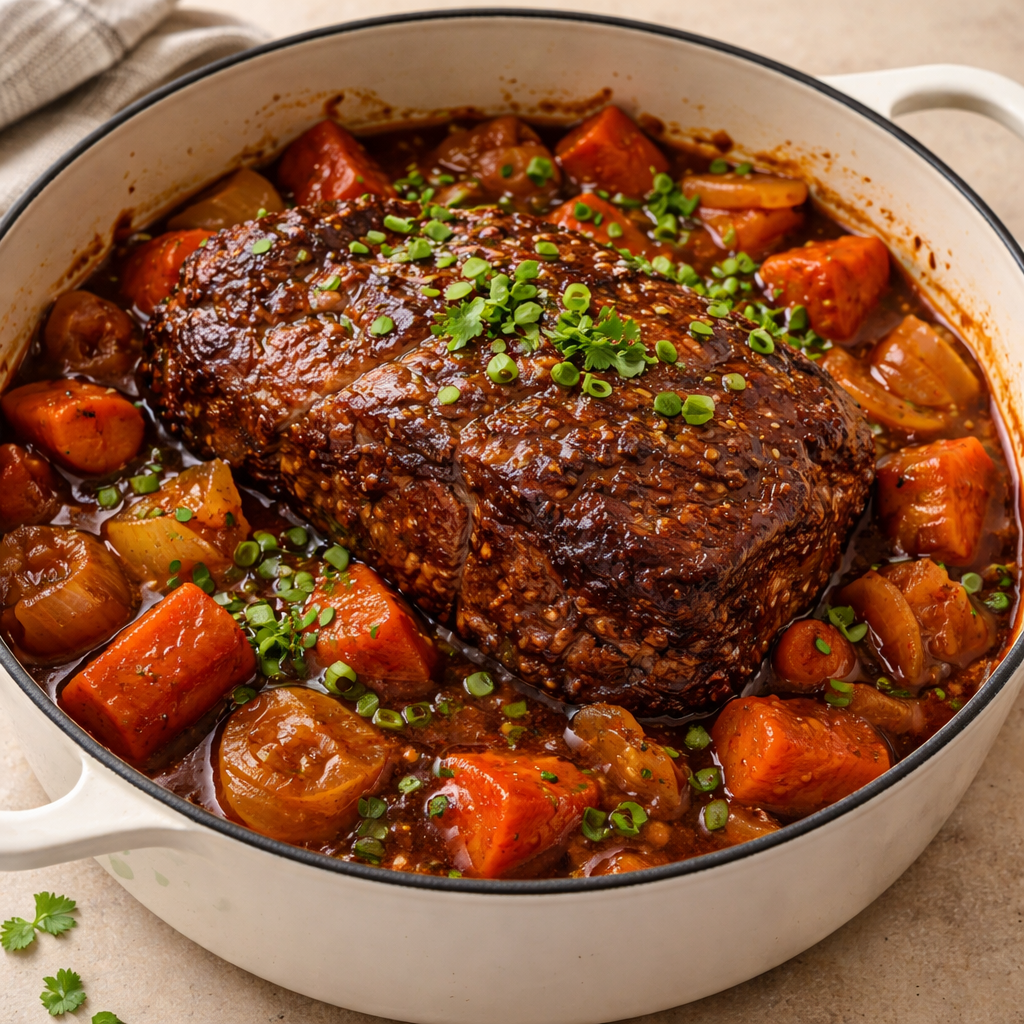
There’s something quite comforting about setting a pot roast in the oven and letting it slowly transform into a tender, flavorful masterpiece. But when it comes to navigating traditional recipes, we often find ourselves at a fork in the road – especially when time isn’t on our side, or we’re tired from a long day. Somewhere at the intersection of tradition and creativity lies a version that feels familiar yet fresh: a Korean-style pot roast. This dish nods to the heartiness of a classic pot roast while inviting a slew of vibrant flavors that warm the soul.
There’s a special thrill to bringing rich and fragrant Korean flavors into the mix. The gentle heat of gochujang mingling with the savory notes of soy sauce and the natural sweetness of carrots creates a comforting blend that feels special, even on a weeknight. It’s about trading complicated steps for straightforward techniques, allowing you to savor both the cooking and the company around the table.
Let’s make this pot roast together. You may not need a culinary degree; you just need a little love and patience alongside some great ingredients. Gather these supplies:
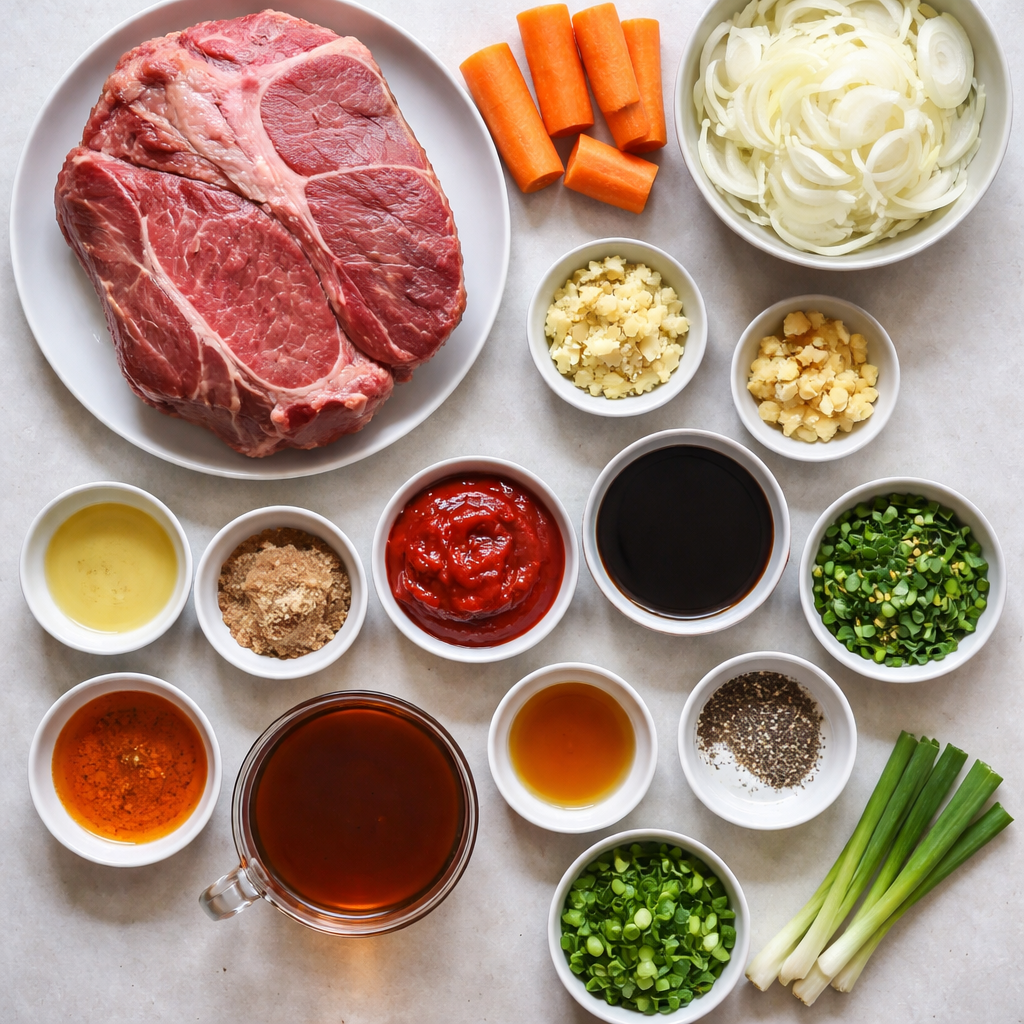
- 3–4 lbs chuck roast
- 3 carrots, peeled and cut into chunks
- 1 large onion, sliced
- 5 garlic cloves, minced
- 1 tablespoon fresh ginger, minced
- 1/4 cup soy sauce
- 2 tablespoons gochujang Korean chili paste
- 2 tablespoons brown sugar
- 2 tablespoons rice vinegar
- 1 tablespoon sesame oil
- 1 cup beef broth
- 2 green onions, chopped (for garnish)
- 2 tablespoons chopped cilantro, optional
- Salt and freshly ground black pepper
- 1–2 tablespoons neutral oil, for searing
The Ritual of Sear
As you approach the stove, you’ll want to give your chuck roast a little pat-down with a dry cloth, something I like to do as a way to set the stage. Laying down a sprinkle of salt and freshly cracked black pepper is something I find comforting too; it’s a small ritual that reminds me that even the simplest actions create the foundation for something beautiful.
Next, you’re going to heat some neutral oil in your trusty Dutch oven — I have mine resting on the stove, always ready for action. Searing the roast is where the magic begins. Watch for that lovely golden color to form, which adds depth to the dish. If you hear just the right sizzle when you place it in the pan, you’re off to a good start. Don’t rush this step; give it a moment to develop that irresistible crust.
Layering Flavor
Once your chuck roast is seared to perfection and resting quietly on a plate (well deserved, if you ask me), it’s time to turn your attention to the aromatic trio of garlic, onion, and ginger. As the onion softens and the garlic releases its fragrance, you’ll start to feel the homey embrace of what’s to come.
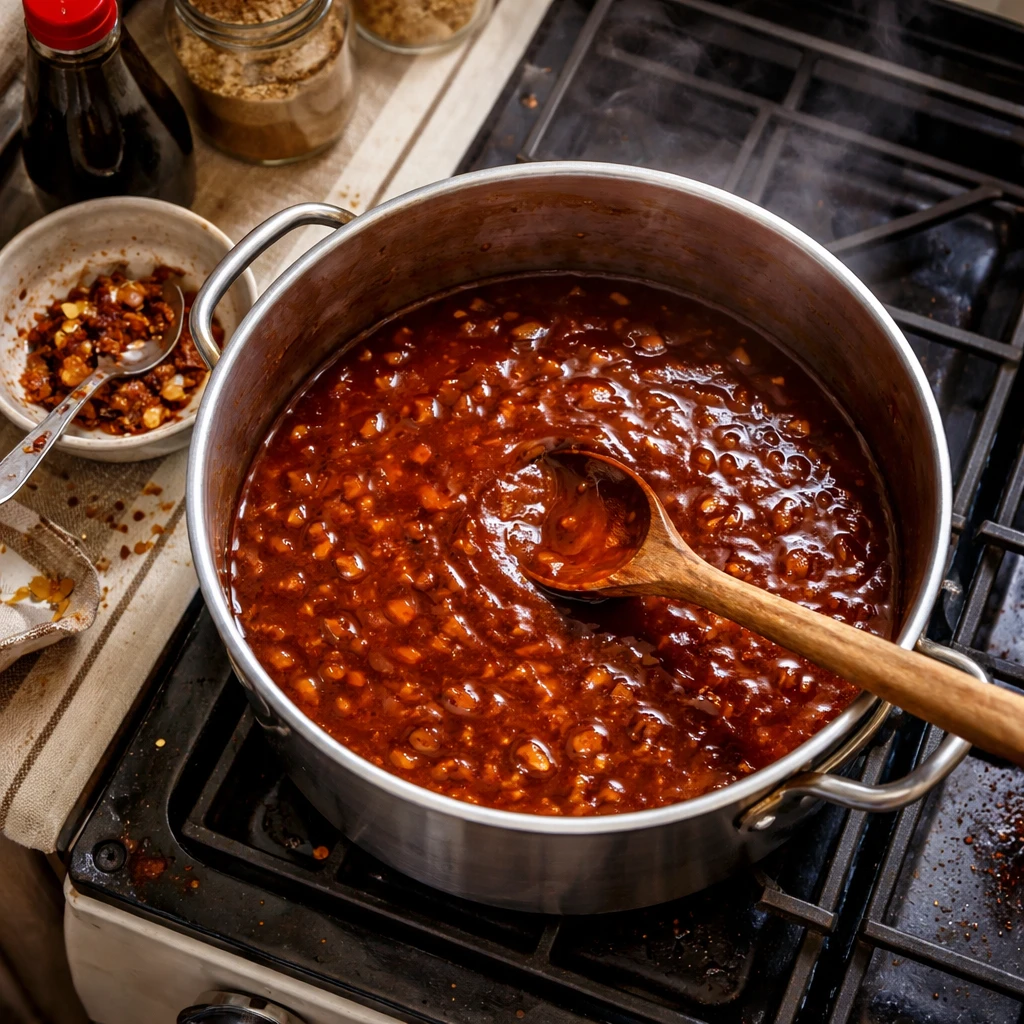
Add in the gochujang, soy sauce, brown sugar, and a splash of rice vinegar. Stir it all together to create a glossy, vibrant sauce that’s bursting with flavor. And don’t fret if things get a bit sticky; it’s simply your pot begging for the tender kiss of the beef broth. Pour that in slowly to deglaze the bottom of your pot, scraping up any flavorful bits left behind. Those residues are treasures waiting to be awakened.
The Heart of the Matter
Now it’s time for the roast to reunite with its flavorful sauce. Nestle it gently back into the pot, surrounded by the chunky carrots that will absorb the rich broth as they cook. Cover it up and place it into a pre-heated oven; we’re going to braise it at 325°F for something like three to three-and-a-half hours. The significant wait is truly a gift; it’s a moment for you to breathe and perhaps set the table, or sneak in a quick moment of quiet with a book.
You want the roast to be fork-tender when you take it out, so don’t be shy about checking the tenderness. There’s a satisfaction that comes with that first fork twist, revealing the juicy strands of beef that just fall apart with ease.
Finishing Touches
Once your pot roast emerges from the oven, think of it as an artist’s canvas, waiting for the finishing details. Give it a gentle skim to remove any excess fat on top — I find it’s like smoothing out the edges of a piece of art before it’s ready to be admired.
A drizzle of sesame oil adds a fragrant hint, and a sprinkling of green onions and cilantro gives it that beautiful final touch, inviting everyone to dive in. It also offers that pop of color and freshness that lifts the dish from the cozy depths of comfort food to something extraordinary.
Serving Recommendations
The beauty of this Korean-style pot roast is that it adapts easily to whatever you have on hand. Serve it over a fluffy bed of rice, or let it accompany a heaping mound of creamy mashed potatoes. The sauce is magnetic, encouraging each bite to become an indulgent flavor experience, so feel free to use wraps or even a slice of crusty bread to soak it all up.
And honestly, the leftovers—if there are any—provide a beautiful base for sandwiches that taste like Sunday, even on a Thursday.
A Few Common Queries
Absolutely! While chuck roast holds up beautifully to the long cooking time, you can experiment with brisket or even round. Just keep an eye on the cooking time, as leaner cuts may cook faster and can become dry if not monitored closely.
You can substitute it with a mix of chili paste and a bit of sugar to mimic the sweetness and heat, though the flavor won’t be quite the same. If you prefer milder flavors, using a dash of Sriracha or even a sprinkle of red pepper flakes can help, too!
Certainly! Start by searing the roast in a skillet, then add it to your slow cooker with the other ingredients. Cook on low for 6-8 hours for tender results that will melt in your mouth. It’s a great option for busy days when you want dinner waiting for you!
For sure! Once cooled, transfer the leftovers to an airtight container or freezer bag. It should keep well for up to three months. When you’re ready to enjoy it again, just thaw in the refrigerator and reheat on the stovetop or microwave until heated through.
Consider simple steamed vegetables, a crunchy Korean salad, or even kimchi to contrast with the rich flavors of the pot roast. A warm bowl of miso soup would also create a lovely, comforting meal!
Bringing It All Together
As you sit down at the table, with the faint echo of simmering and that warm, savory aroma still swirling in the air, allow yourself to savor this moment. Each bite of the pot roast carries with it the comfort of home and the essence of a kitchen filled with love and laughter. Let it remind you that good food creates connections, nourishes our spirits, and proves that a moment of calm in a busy day can truly lead to something extraordinary.